
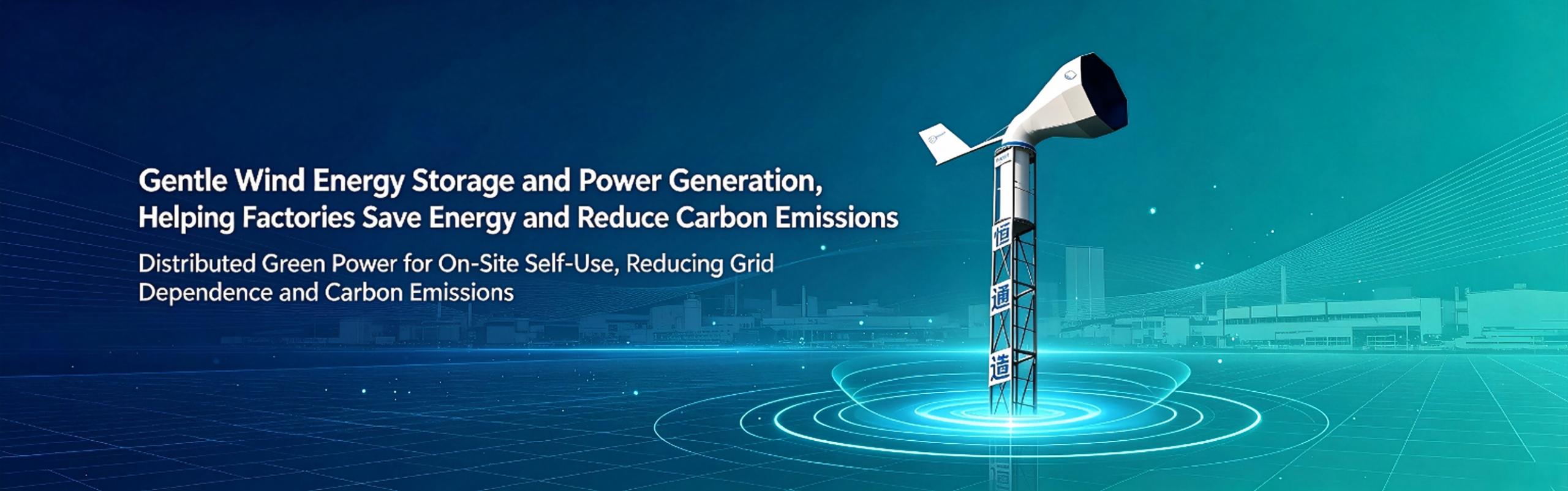
Energy Conservation and Carbon Reduction
Against the backdrop of the ongoing implementation of the ‘Dual Carbon’ policy and increasingly stringent controls on industrial energy consumption, many manufacturing enterprises are facing a range of challenges, including high electricity costs, tight energy consumption targets, significant pressure to reduce carbon emissions, and difficulties in obtaining green factory certification.
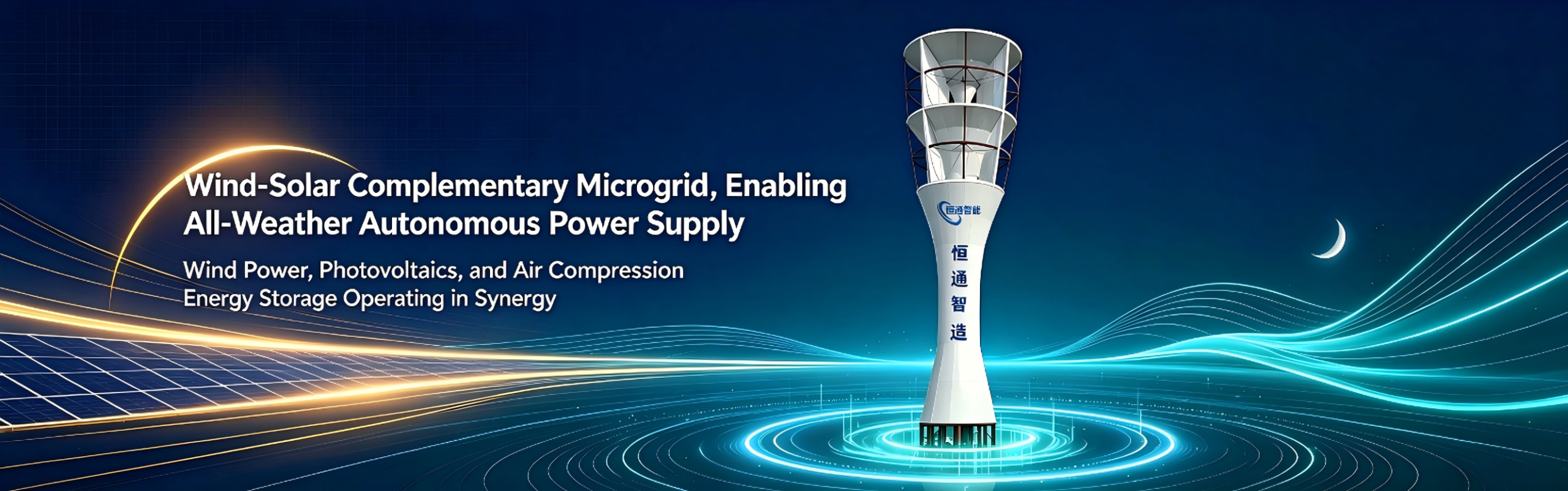
All-weather autonomous power supply solution
Photovoltaic power generation relies on sunlight; its efficiency drops significantly at night, on overcast or rainy days, or during periods of smog, and it may even cease operation entirely. Wind power generation relies on natural wind; however, wind speeds fluctuate considerably and vary markedly between day and night, resulting in an unstable power supply.
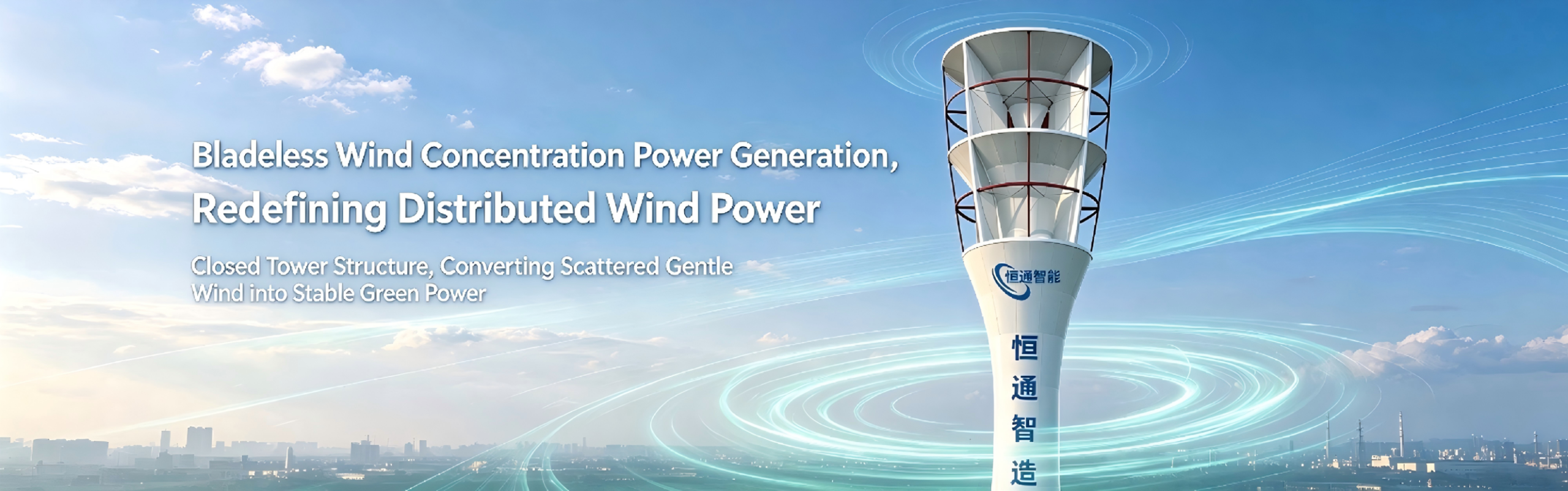
Blade-less Concentrated Wind Power Generation
Whilst traditional horizontal-axis wind turbine technology is well-established, it suffers from inherent limitations that prevent it from being suitable for distributed, lightweight, and close-proximity power generation scenarios on the consumer side.
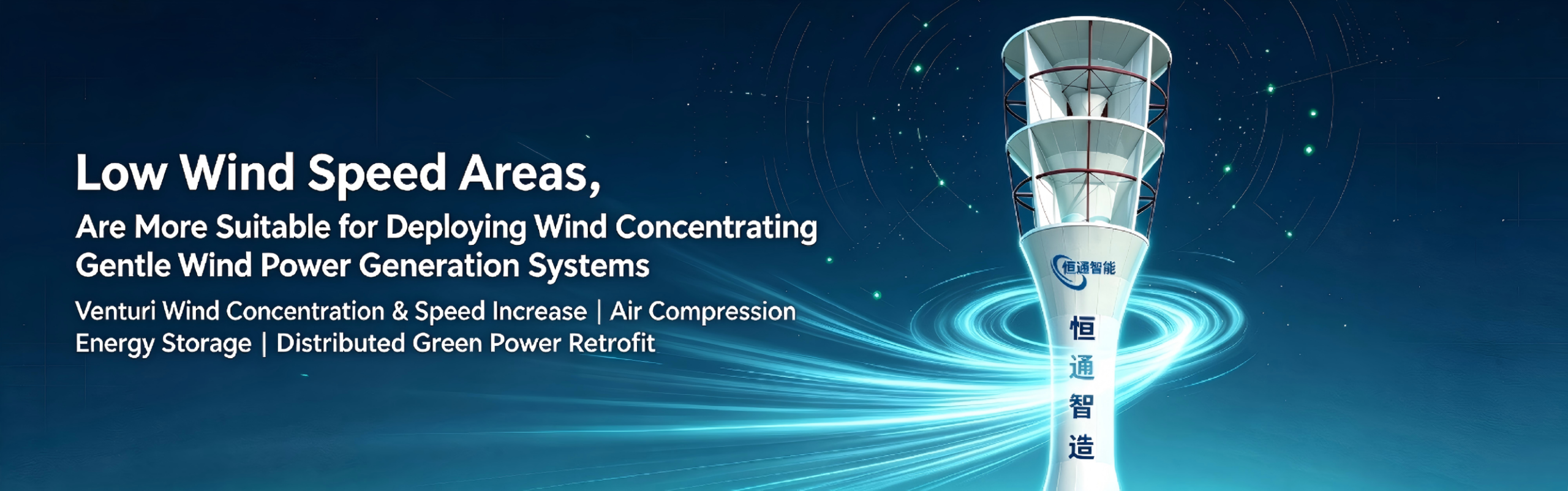
Low-wind-speed Areas: Light Wind Power Generation System
The distribution of wind energy resources in China exhibits marked regional variations. The northern grasslands and coastal wind corridors are high-wind-speed areas and have traditionally been the main locations for large-scale wind power projects.
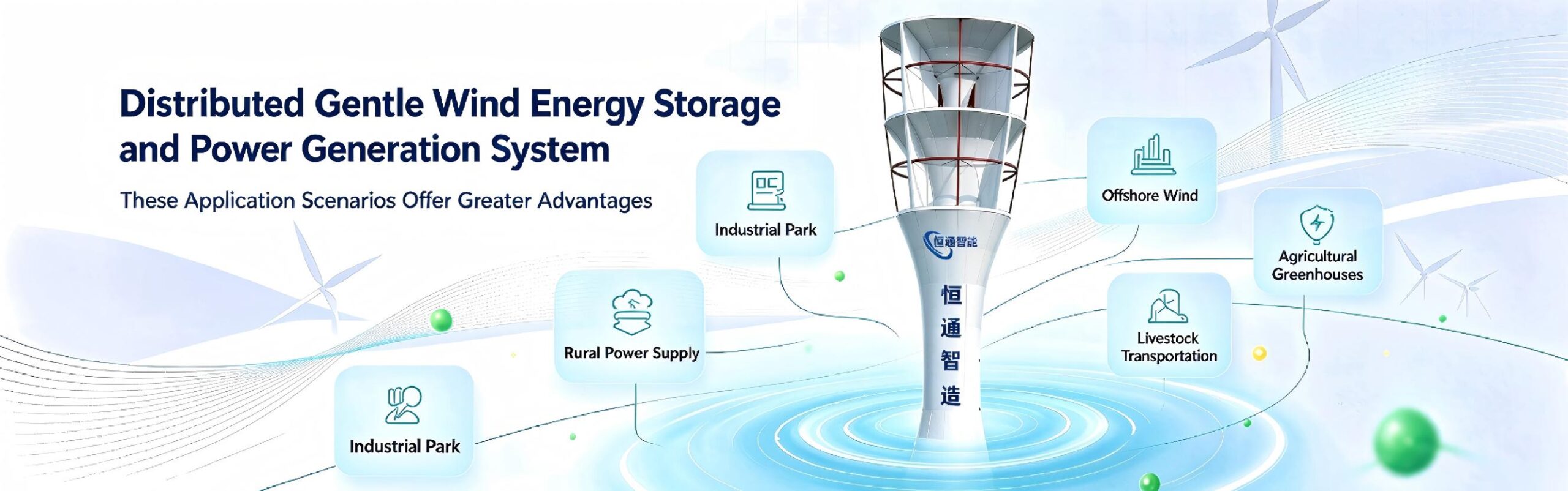
Breeze Energy Storage and Power Generation System
With the ‘Dual Carbon’ policy now fully implemented and enterprises’ demands for energy conservation and carbon reduction continuing to rise, the application of clean energy is no longer confined to large-scale energy projects such as major wind farms and centralised solar power stations.
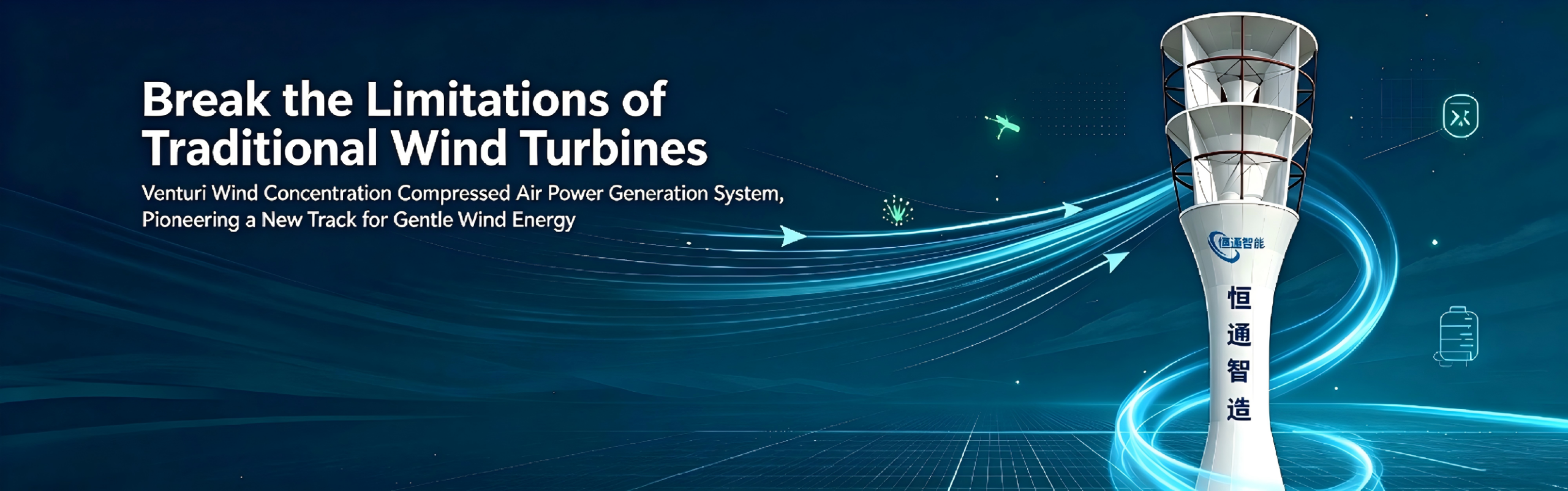
Breaking Through Traditional Limitations
Wind energy development has relied heavily on large horizontal-axis wind turbines, commonly known as ‘windmills’. Whilst the technology behind these turbines is well-established, their inherent limitations have restricted the deployment of wind energy in a wider range of scenarios.
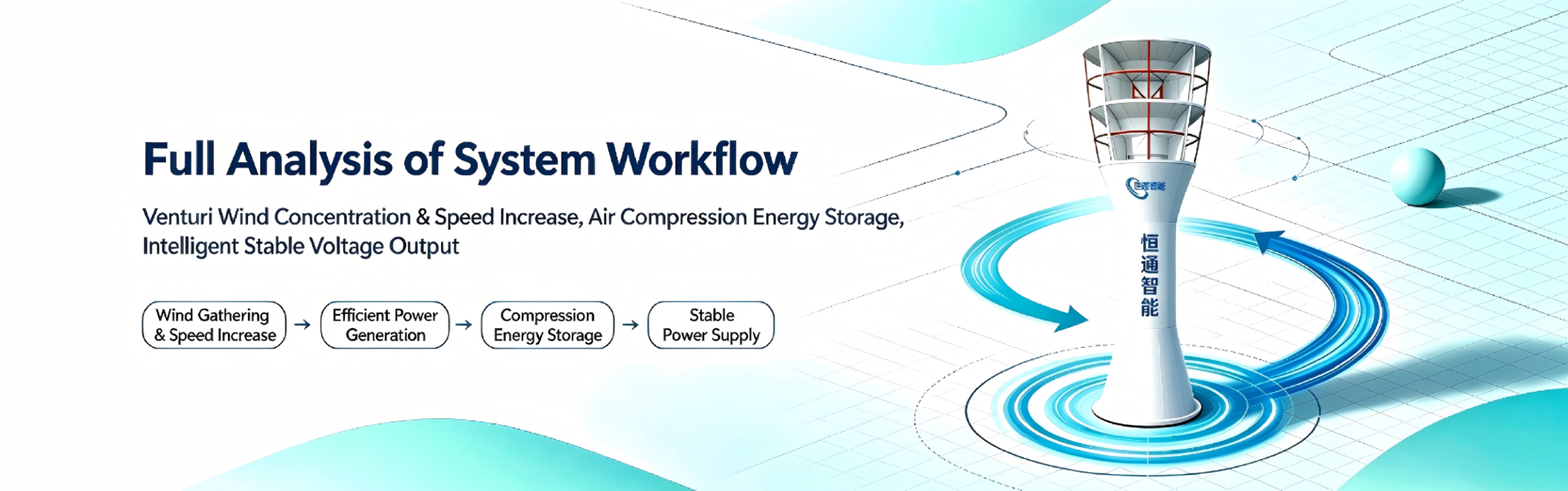
Workflow of an Air Compression Power Generation System
In today’s rapidly evolving new energy sector, wind power is by no means an unfamiliar concept; however, the vast majority of people’s understanding of wind power remains confined to the traditional image of large, three-bladed wind turbines.
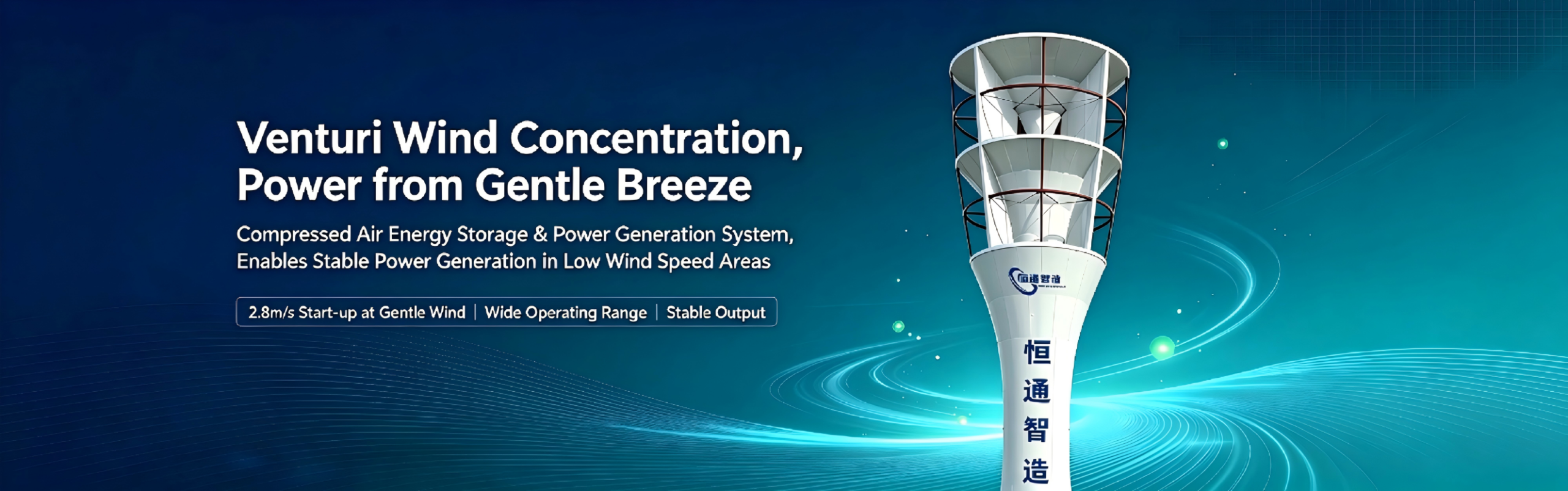
New Approaches to Wind Energy Storage
A New Approach to Wind Energy Storage: Traditional wind power generation relies heavily on strong winds, and the wind energy potential in numerous low-wind-speed areas has long been difficult to harness effectively.